
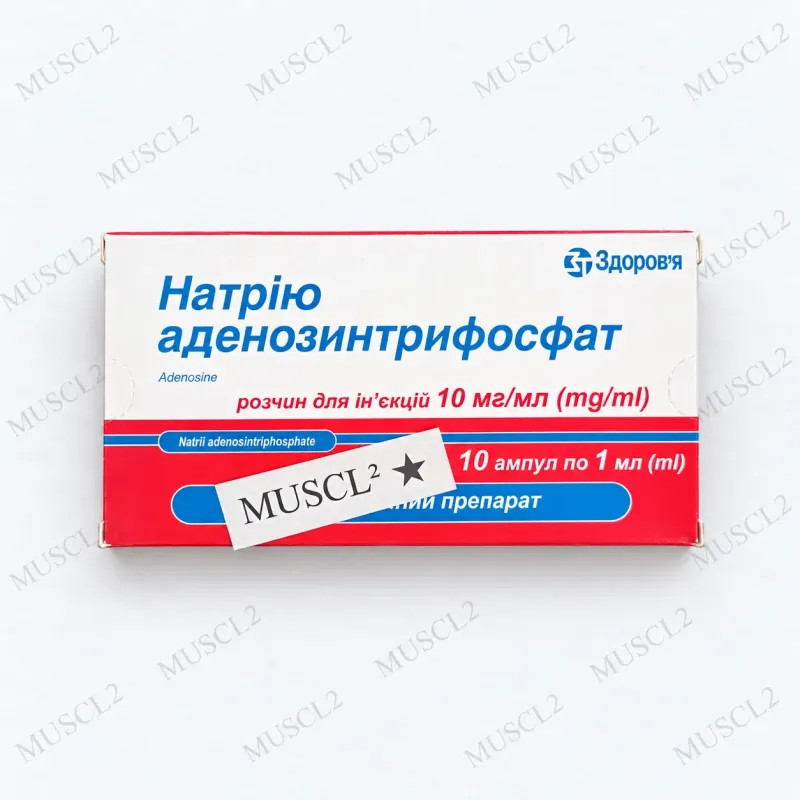
ATP (Sodium Adenosine Triphosphate) inj. 10 mg/ml - 10 ampoules
- Manufacturer: Zdorovye (Ukraine)
- Product Code: atp-izdorovye-inj
- Availability: In Stock
9.00€
- Delivery within EU (3-5 days)
Composition
Active substance: adenosine;
1 ml of solution contains disodium adenosine-5′-triphosphate equivalent to 10 mg of 100% adenosine triphosphoric acid;
Other ingredients: sodium hydroxide, water for injections.
Pharmaceutical Form
Solution for injection.
Basic physicochemical properties: a clear, colourless or slightly yellowish liquid.
Pharmacotherapeutic Group
Cardiac preparations. ATC code C01E B10.
Pharmacodynamics
Sodium adenosine triphosphate is a salt of adenosine-5′-triphosphoric acid (ATP), a natural metabolite of the body involved in many vital biochemical reactions. When interacting with the contractile protein actomyosin, ATP breaks down into adenosine diphosphoric acid and inorganic phosphate, releasing the energy required for muscular activity and many biosynthetic processes (protein, urea).
It promotes smooth muscle relaxation, facilitates the transmission of nerve impulses in autonomic adrenergic and cholinergic ganglia and the transmission of excitation from the vagus nerve to the heart. It has anti-ischaemic, membrane-stabilising and antiarrhythmic effects, improves the antioxidant protection of the myocardium and increases its contractility.
Pharmacokinetics
After parenteral administration, it penetrates the cells of organs, where ATP interacts with the contractile protein actomyosin and breaks down into adenosine diphosphoric acid and inorganic phosphate, releasing energy used by muscles to perform mechanical work and for synthetic processes (protein synthesis). The breakdown products are subsequently incorporated into ATP synthesis. The antiarrhythmic effect occurs 20–40 seconds after administration.
Indications
As part of combination therapy for muscular dystrophy and atrophy, for terminating paroxysms of supraventricular tachycardia, and for peripheral vascular spasms (Raynaud’s disease, thromboangiitis obliterans). To be prescribed for peripheral, mixed and central forms of pigmentary retinal degeneration.
Contraindications
Hypersensitivity to the components of the medicine; cardiogenic shock and other types of shock; decompensated heart failure, prolonged QT syndrome, acute myocardial infarction, haemorrhagic stroke, severe bradyarrhythmias, second- or third-degree atrioventricular block; arterial hypotension; hyperkalaemia, hypermagnesaemia; lung diseases; chronic obstructive pulmonary diseases (e.g. bronchial asthma); pregnancy or breastfeeding; paediatric age. Must not be administered concomitantly with cardiac glycosides at high doses.
Interactions with Other Medicinal Products and Other Forms of Interaction
Concomitant use with potassium-sparing diuretics, potassium preparations and angiotensin-converting enzyme (ACE) inhibitors increases the risk of hyperkalaemia; concomitant use with magnesium preparations increases the risk of hypermagnesaemia.
The medicine may enhance the antianginal effects of beta-blockers and nitrates.
Concomitant use with dipyridamole enhances the effects of dipyridamole, particularly its vasodilator effect.
Some antagonism is observed with concomitant use of the medicine and purine derivatives (caffeine and theophylline).
Must not be administered concomitantly with cardiac glycosides at high doses, as this increases the risk of cardiovascular adverse reactions.
Concomitant use with xantinol nicotinate reduces the effect of sodium adenosine triphosphate.
Carbamazepine may enhance the effects of adenosine and lead to the development of heart block.
Special Precautions for Use
Intravenous administration of the medicine must be performed only in a hospital setting under supervision and with cardiac function monitoring.
The medicine must be administered slowly, after which blood pressure should be measured.
Use with caution in marked bradycardia (except severe forms of bradyarrhythmia), sick sinus syndrome, first-degree atrioventricular block and a tendency towards arterial hypotension.
During prolonged use, blood potassium and magnesium levels must be monitored. Prescribe with caution in patients prone to bronchospasm. Limit consumption of products containing caffeine (coffee, tea, cola drinks).
The medicine must not be administered at high doses concomitantly with cardiac glycosides.
Effects on the Ability to Drive and Use Machines
During treatment, patients should refrain from driving or operating other machinery requiring increased attention.
Use During Pregnancy or Breastfeeding
No data are available on the use of the medicine during pregnancy or breastfeeding.
Method of Administration and Dosage
Administer intramuscularly or intravenously.
For the treatment of muscular dystrophies and peripheral circulatory disorders, prescribe 1 ml once daily for the first 2–3 days, followed by 1 ml twice daily or 2 ml once daily. The course of treatment is 30–40 days. If necessary, repeat the course of treatment at an interval of 1–2 months.
For hereditary pigmentary retinal degeneration, prescribe 5 ml intramuscularly twice daily at an interval of 6–8 hours, every day for 15 days. If necessary, courses may be repeated at intervals of 8–12 months. To terminate supraventricular tachyarrhythmias, administer 1–2 ml intravenously over 5–10 seconds (the effect is observed after 20–40 seconds). If necessary, repeat administration at the same dose after 2–3 minutes.
Children
There is no experience of use in children; therefore, the medicine is contraindicated in this patient population.
Overdose
Symptoms: second- and third-degree atrioventricular block, asystole, bronchospasm, onset of arrhythmias and ventricular disturbances; sinus bradycardia and tachycardia; dizziness, arterial hypotension, brief loss of consciousness. Allergic reactions are possible.
Treatment. Discontinue administration of the medicine and prescribe cardiotonic agents. Treatment is symptomatic. Xanthines (aminophylline, theophylline) are competitive antagonists of adenosine.
Adverse Reactions
Central nervous system: headache, dizziness, brief loss of consciousness, a feeling of pressure in the head, phobias.
Eyes: blurred vision.
Gastrointestinal tract: nausea, metallic taste in the mouth, increased gastrointestinal motility (with intravenous administration).
Cardiovascular system: palpitations, chest discomfort, tachycardia or bradycardia, arterial hypotension, AV conduction disturbances (atrioventricular block), arrhythmia, asystole.
Musculoskeletal system: pain in the arms, back and neck.
Urinary system: increased diuresis.
Respiratory system: dyspnoea, bronchospasm.
Skin and subcutaneous tissue: facial flushing, itching, skin rash.
Injection site disorders: tingling sensation, skin redness.
Allergic reactions: hypersensitivity reactions, allergic dermatitis, urticaria, anaphylactic shock, angioedema.
General disorders: increased sweating, hyperthermia, a feeling of warmth.
Shelf Life
2 years.
Storage Conditions
Store in the original packaging at a temperature between +2 and +8 °C. Keep out of the reach of children.
Packaging
1 ml per ampoule; 10 ampoules in a cardboard box.
Supply Category
Prescription only.
Manufacturer
LLC “Kharkiv Pharmaceutical Enterprise ‘Zdorovye Naroda’”.
Delivery within the EU
We deliver ATP (Sodium Adenosine Triphosphate) injections to all countries within the European Union: