
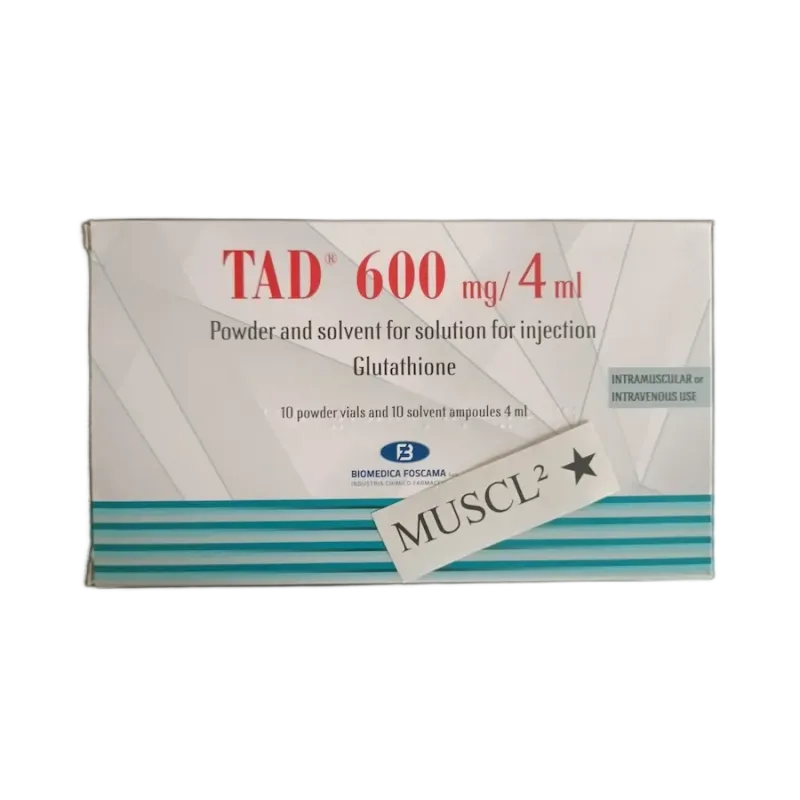
TAD 600 mg/4 ml. (Glutathione) - 10 vials
- Manufacturer: Biomedica Foscana (Italy)
- Product Code: tad600
- Availability: In Stock
112.00€
- Delivery within EU (3-5 days)
TAD 600 mg/4 ml — Glutathione, 10 Vials
TAD 600 mg glutathione is a powder-and-solvent medicine for injection. Its active ingredient, reduced glutathione (GSH), is a naturally occurring component of the body's cellular antioxidant system.
TAD 600 mg glutathione is a powder-and-solvent medicine for injection. Its active ingredient, reduced glutathione (GSH), participates in cellular antioxidant defence. Glutathione is also studied in exercise science in relation to redox balance, exercise-related fatigue and resistance training.
Glutathione in Sport and Exercise
Glutathione and exercise research focuses on the body's response to physical work, including antioxidant regulation and fatigue. Glutathione is part of the cellular redox system, which links antioxidant defence with metabolic regulation. This physiological role explains its relevance to sports science.
For readers interested in glutathione for athletes, the details of each study matter: the formulation, route of administration, training protocol and measured outcome. The exercise studies below used oral supplements; TAD 600 is an injectable prescription medicine with its own clinical indication.
Human Studies in Exercise Science
Cycling exercise and fatigue — Aoi et al., 2015
In a double-blind crossover study, eight healthy men who did not exercise regularly received oral glutathione capsules or placebo for two weeks before a 60-minute cycle-ergometer session. Researchers reported a smaller exercise-related rise in blood lactate and improvements in fatigue-related mood scores with glutathione.
This was a study of oral supplementation in healthy men, rather than a trial of TAD injections in trained cyclists. Its findings concern the specific exercise test and outcomes measured.
Read the cycling and fatigue study — Journal of the International Society of Sports NutritionResistance training and body composition — Hwang et al., 2018
A randomised, double-blind trial studied 75 resistance-trained men over eight weeks. Participants received oral glutathione plus L-citrulline, citrulline malate, or placebo alongside resistance training.
The glutathione-plus-citrulline group showed a greater increase in lean mass than placebo at week four. At week eight, there were no significant between-group differences in the measured outcomes. The trial evaluated a combined oral supplement, so its results cannot be attributed to glutathione alone or transferred to injectable TAD.
Read the resistance-training study — Journal of the International Society of Sports NutritionComposition and Presentation
Glutathione and Cellular Function
Glutathione is formed from three amino acids: glutamate, cysteine and glycine. Cells synthesise it through two enzymatic steps, and its production is regulated by precursor availability and enzyme activity.
As an intracellular antioxidant, glutathione participates in the control of oxidative stress and the maintenance of redox balance. It also contributes to the metabolism of foreign compounds and to cellular signalling.
- Antioxidant defence: glutathione participates in cellular systems that handle reactive oxygen compounds.
- Metabolic function: it is involved in enzymatic pathways that process substances entering the body.
- Cell regulation: glutathione-dependent processes contribute to protein function, cell proliferation and immune-cell activity.
These are physiological functions of glutathione. Lu, 2013 — Glutathione synthesis reviews its synthesis, regulation and cellular roles.
Indication
The Italian leaflet lists prevention of neuropathy associated with cisplatin or related chemotherapy.
Clinical Research
Clinical Research in the Approved Treatment Context
Reduced glutathione during cisplatin treatment
A randomised, double-blind, placebo-controlled trial enrolled 50 patients with advanced gastric cancer receiving cisplatin-based chemotherapy. At week 15, neurotoxicity was recorded in 4 of 24 assessable patients receiving glutathione, compared with 16 of 18 receiving placebo. The study examined glutathione as an adjunct within a defined oncology treatment protocol.
Read the study — Cascinu et al., Journal of Clinical Oncology, 1995Method of Administration
After reconstitution, TAD 600 is administered intramuscularly or by slow intravenous injection. A healthcare professional determines the dose and schedule. Use immediately after preparation; discard any remainder.
Contraindications and Precautions
Do not use with an allergy to its ingredients. Discuss pregnancy, breastfeeding and other medicines with the prescriber. Do not mix with other medicinal products.
Possible Side Effects
Reported effects include injection-site pain and very rare rash after intramuscular use. Injection-related complications include fever, local infection, phlebitis, venous thrombosis and extravasation.
Storage Conditions
Follow the supplied pack's storage instructions and expiry date. Keep out of children's reach.
TAD package leaflet — composition, use and safety information (Italian)
This glutathione 600 mg injection presentation contains ten treatment vials with matching solvent ampoules. Shipping destinations and charges are listed below.
Delivery within the EU
We deliver to all countries within the European Union:
Related Products
Prefolic 50 mg/3ml. (6 ampoules)
Looking for Prefolic online? View product information, compare available pack options and check pric..